
Small Repairs, Major Consequences: The Real Cost of Deferred Maintenance
Preventive maintenance can be one of the easiest expenses for a commercial property owner to postpone. When a roof is not actively leaking, a parking lot still appears serviceable, or building equipment continues to operate, spending money on inspections and maintenance may not feel urgent.
The problem is that deferred maintenance rarely remains static. Small, manageable issues can develop into major repairs, disrupt tenants, complicate insurance coverage, and reduce a property’s marketability and value. Based on our experience managing commercial properties throughout Southern California, deferred maintenance is one of the most common—and most preventable—risks owners face.
SMALL ISSUES CAN BECOME EXPENSIVE REPAIRS
Deferred maintenance rarely begins with a major failure. More often, it starts with a minor condition that goes undetected or is repeatedly addressed without evaluating the underlying cause. Routine inspections help identify those concerns early, when owners typically have more options and greater control over the timing and cost of the work.
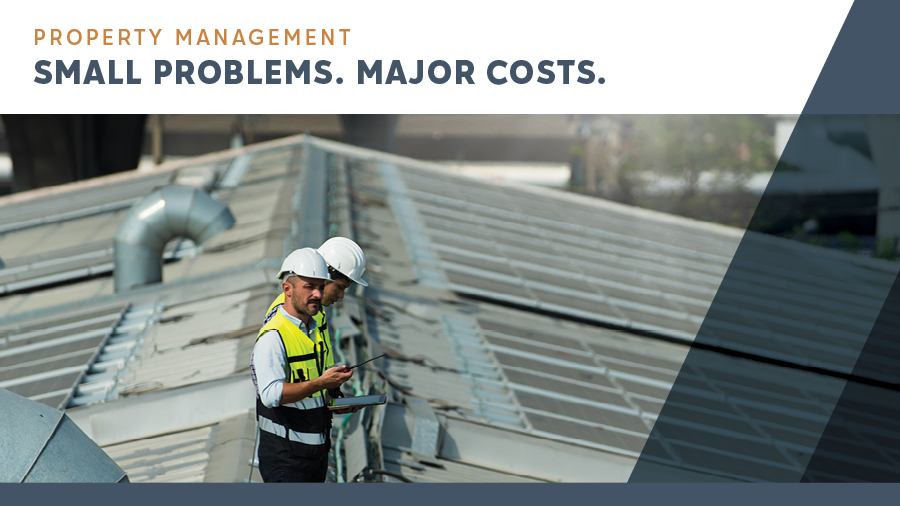
At one client’s industrial property, a roof that was approximately 25 years old had never been included in a routine inspection and preventive maintenance program. As the roof aged, leaks were repaired individually, but its overall condition was not evaluated. When the owner eventually replaced the roof, contractors discovered extensive water damage in the plywood decking below it.
Replacing the decking on only half of the roof has already cost the owner approximately $30,000. Earlier inspections and preventive maintenance likely would have identified the deteriorating conditions sooner and reduced the extent of the damage. The lesson is not that every aging roof must be replaced immediately. It is that owners need reliable information about a building system’s condition before a manageable issue becomes an emergency.
DEFERRED MAINTENANCE AFFECTS MORE THAN THE REPAIR BUDGET
The financial impact of deferred maintenance extends beyond the eventual repair. As building systems age, relatively minor deficiencies often become larger capital projects. At the same time, labor, materials, fuel, and equipment costs may continue to rise, increasing the expense of work that has been postponed.
Maintenance conditions can also affect insurance. At an older five-unit commercial property that GMP took on the management of, the insurance carrier determined during an inspection that the aging electrical panels no longer met its underwriting requirements. The carrier required the panels to be replaced for coverage to continue. Replacing all five panels will cost more than $100,000. Had the work been completed 10 to 15 years earlier, the cost likely would have been substantially lower.
Deferred maintenance may also influence value during a sale or refinance. Aging roofs, outdated electrical systems, deteriorated paving, and other conditions are routinely identified during due diligence. Buyers and lenders may account for those risks through additional requirements, repair credits, or reduced valuations—not only because of the known cost of the work, but also because of the uncertainty surrounding what else may be discovered.
BUILD PREVENTIVE MAINTENANCE INTO THE ASSET PLAN
The most effective approach is to treat preventive maintenance as a core component of long-term asset management rather than an optional expense that is considered only when a problem becomes visible.
Roofing systems, parking lots, HVAC equipment, fire protection systems, electrical components, and other major building systems all require routine inspections and scheduled maintenance. Parking lots provide a straightforward example: regular slurry sealing and restriping can help prevent water from penetrating the asphalt, where small surface cracks may eventually develop into far more extensive repairs.
As part of the annual budgeting process, the GM Properties team works with owners to identify routine maintenance needs, anticipate larger capital improvements, and establish reserves for future projects. This allows owners to prioritize work based on condition, risk, tenant impact, and available capital, rather than responding to a series of unplanned emergencies.
When assuming management of a property, our team also evaluates existing maintenance needs, establishes a preventive maintenance schedule, and helps develop a longer-term capital plan based on the property’s current condition and expected future requirements.
Preventive maintenance will not eliminate every repair, nor should every project be completed at once. The objective is to understand the condition of the asset, identify problems early, and make informed decisions about when and how to address them. A planned repair is generally easier to budget, schedule, and manage than a costly surprise.
_______________________
GM Properties provides Property Management and Asset Management services designed to help commercial property owners plan preventive maintenance, budget for capital improvements, and preserve the long-term performance and value of their properties.
562-697-5000
Learn more about our related services:
PROPERTY MANAGEMENT
ASSOCIATION MANAGEMENT
ASSET MANAGEMENT
BROKERAGE
TRUSTEE SERVICES
NET LEASE SERVICES